Free vs licensed fonts for menus: what you can legally print
Which font licences allow you to print a restaurant menu, what free for personal use really means, what a commercial licence costs, and how to check before you print.
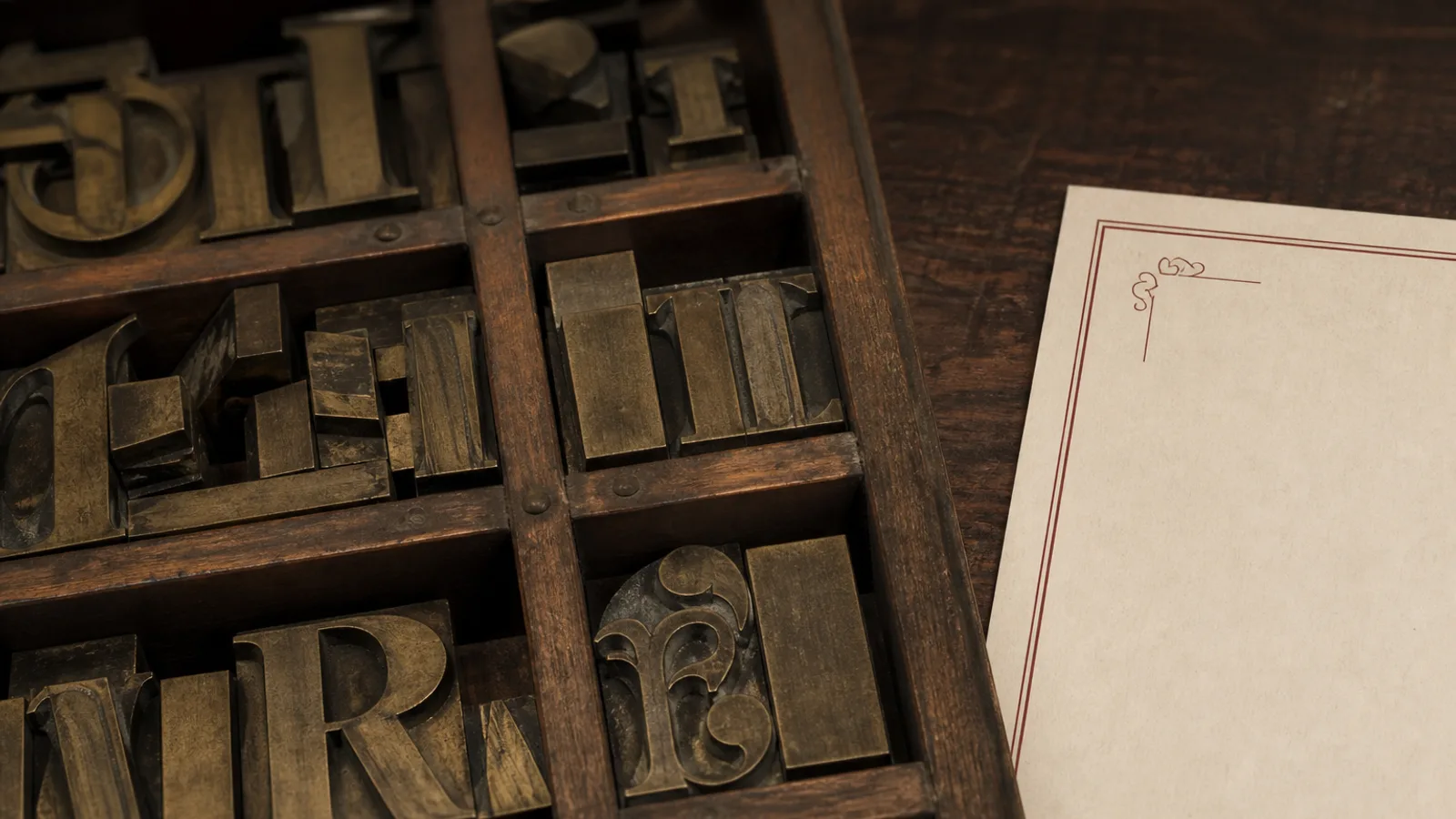
A restaurant menu is a commercial document. It sells food, it carries a business name, it is printed in quantity and handed to paying customers. That single fact changes which fonts you are allowed to use on it, and most owners find out only when a foundry's letter arrives or when a designer refuses to hand over a file. This is a plain-language guide to font licensing as it applies to menus: what the common licences allow, what free really means, what a proper licence costs, and a checklist to run before the print order.
A font is software, and you buy a licence, not a file
The letterforms of a typeface are protected in most European countries as designs or as copyrighted works, and the font file itself is software protected by copyright everywhere. When you download a font, you are not acquiring the font; you are acquiring a licence to use it under certain conditions. Those conditions are written in a licence text that ships with the file (often a text or PDF named licence, EULA or OFL), and that text is the only thing that matters. Not the website, not the tutorial that used the font, not the fact that a friend sent it to you.
Printing a menu is a use of the font. If the licence permits commercial use and print, you are fine. If it permits personal use only, or only web use, you are not, regardless of how small your restaurant is.
The four kinds of licence you will meet
- Open licences (SIL Open Font License, Apache 2.0): the whole Google Fonts library and many foundry releases. You may use them commercially, in print, embed them in PDFs and even modify them; the only restriction is you cannot sell the font itself. Safe for any menu.
- Free for personal use: the majority of fonts on free download sites. Personal means non-commercial. A menu is commercial. These fonts require a paid commercial licence from the designer, which the site usually links to.
- Desktop commercial licences: sold by foundries per number of users or per company. A desktop licence covers creating print documents, including menus, and embedding a subset in PDFs. Typically 30 to 90 € per style or 150 to 400 € for a family for one to two users.
- Subscription libraries (Adobe Fonts included with Creative Cloud, Monotype Fonts): licensed to the subscriber for their work. Your designer can create the menu with them; you may print it. You cannot receive the font files to reuse yourself unless you hold your own subscription.
One nuance about system fonts: the typefaces bundled with Windows and macOS are licensed for use in documents created on that system, which includes a menu. What you may not do is extract them and send them to a printer or another person as files.
Where the free-for-personal-use trap bites
The typical story: the owner searches for a chalk font or a wedding script, downloads the first attractive result, and the tiny licence file says personal use only. The menu goes to print, the restaurant posts it on Instagram, and eighteen months later the designer of the font sends an invoice with a settlement offer. These letters are real and increasingly automated; foundries use image recognition on social feeds. The settlement is usually a multiple of the licence price, in the low hundreds to a few thousand euros.
The fix is cheap. Nearly every personal-use font on the free sites has a commercial licence available from the designer for 10 to 60 €. Buying it before you print is a rounding error compared to the print bill.
Embedding fonts in the print PDF
Print-ready PDFs must embed their fonts, and embedding is itself a licensed act. Open licences allow it. Commercial desktop licences almost always allow subset embedding in PDFs for print (the technical term is print and preview embedding). What some licences forbid is editable embedding or converting the font to outlines for reuse. If you send editable source files (an InDesign or Illustrator document) to a printer or to another designer, they need their own licence for the fonts inside; sending them the PDF does not raise that issue.
A quick way to check any font
- Find the licence file that came with the download; if there is none, go to the designer's page and look for a licence or EULA.
- Search the text for the words commercial, personal, print and embed.
- If the licence is OFL or Apache: use it. If it says personal use, buy the commercial licence or pick another font.
- Keep a folder with the licence file or the purchase receipt for every font on your menu, next to the print PDF.
- If a designer created the menu, ask them in writing which fonts were used and under which licence; a professional will have the answer ready.
Are free fonts good enough for a menu?
Ten years ago the honest answer was rarely. Today the open-licence catalogue includes typefaces that professional designers use on paid work without hesitation: EB Garamond, Cormorant, Playfair Display, Libre Baskerville, Source Serif and Source Sans, Inter, Work Sans, DM Sans, Fraunces, Alegreya, Lora, Literata. Several have real small caps, old-style figures and complete European character sets. A menu set in two of these will not look cheap, and nobody will ever send you a letter.
Where open fonts still fall short is in distinctive display and script faces. If the name of the restaurant needs a specific voice, a paid display font at 40 to 80 € is often the single best investment in the whole identity. Buy that one and keep the text face free.
What the licence does not cover
A licence to use a font is not a trademark right. Setting your restaurant name in a font gives you no exclusivity over that font; the pizzeria across the road may use the same one. If you want ownership of the wordmark, have it drawn as custom lettering, which you then own outright. Conversely, a font licence does not restrict what you can write with it: the foundry has no say over your menu content.
Legal by default, and better looking for it
Font licensing is one of the few areas where doing the right thing costs almost nothing and improves the result: the open-licence catalogue is now better drawn and better engineered than most of what sits on free download sites under a personal-use clause. Choose from the open catalogue for text, pay a modest fee for a distinctive display face if you need one, keep the receipts, and the question never comes up again.
Menu Atelier only uses typefaces that are licensed for commercial print and PDF embedding across all eight styles, so any menu you design and download or order from the studio is cleared for printing and for posting online; the licence is part of what the 99 € export covers, and the editable source we include lists the fonts and their licences for your records.