A brief that works
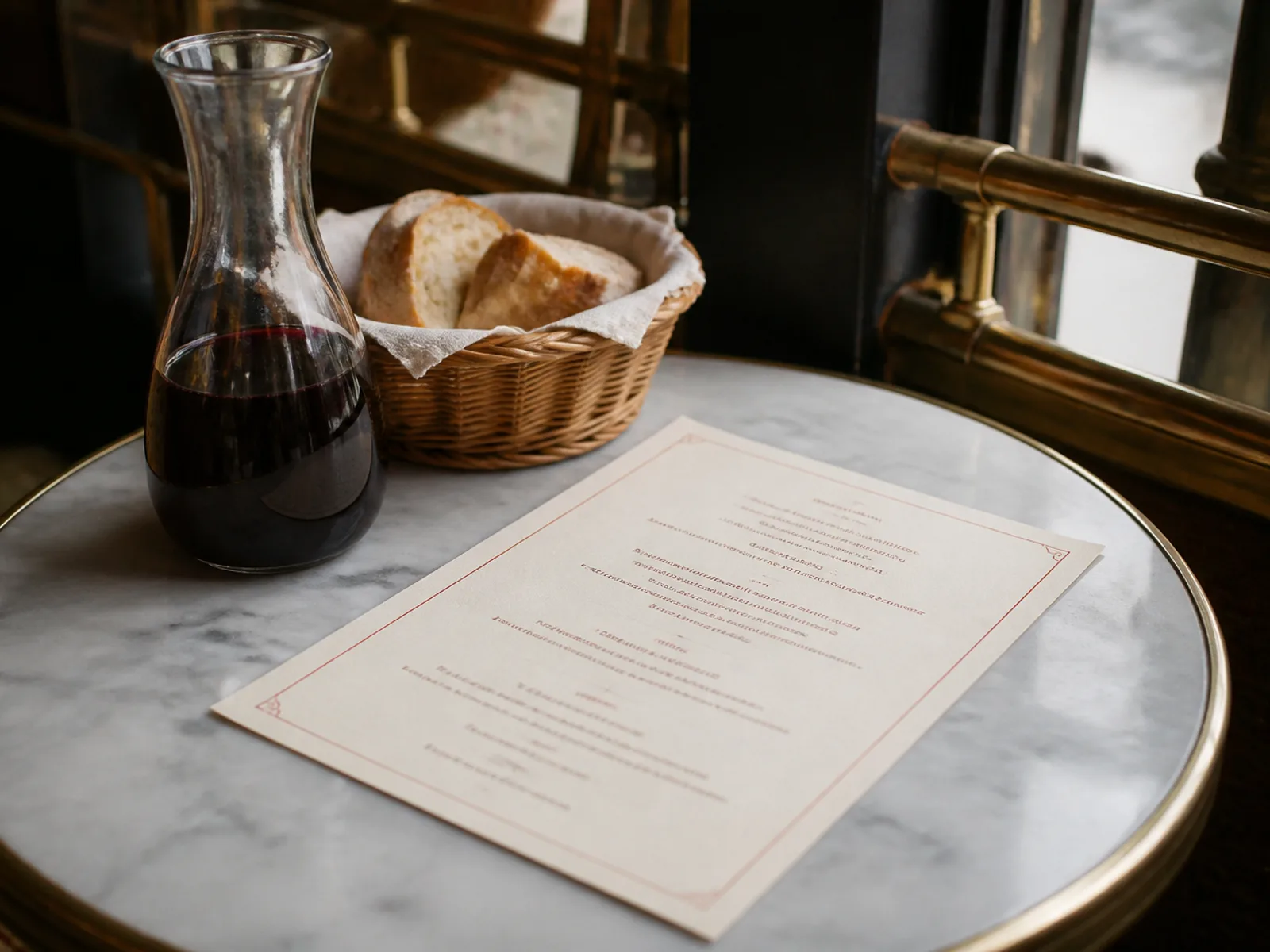
Paste it as is, or use it as a starting point and describe your own room.“Parisian bistro, cream paper, oxblood accents, a classic serif with small caps for section titles, a boxed 'plat du jour' at the top, prices aligned right without decimals.”
The carte is part of the room
A bistro menu should feel like the zinc bar and the chalkboard: unfussy, warm, immediately readable across a table. Menu Atelier derives the palette from your photos, sets a serif that prints crisply at 11 pt, and keeps the price column aligned so guests scan the carte in seconds.
Specials that change without a redesign
Keep a 'plat du jour' or 'suggestions' box in the layout. When the market changes, edit the two lines and re-export; the file stays a paid menu and the download is free. Many bistros print a small A5 insert for specials and keep the A4 carte for the season.
One sheet, two sides
The most common bistro format is a double-sided A4: entrées, plats and fromages on the front, desserts, wines and a short story about the house on the back. Switch to a folded A4 when the wine list deserves its own faces.
Tips for this venue
- ✦ Paste the whole carte, then ask for 'lunch formula boxed at the top' to give the fixed menu the visibility it deserves.
- ✦ Upload a photo of the room and the façade; the AI will echo the awning or tile colours.
- ✦ Ask for 'no decimals' if your prices are whole euros: it cleans the column and saves space.
- ✦ Order 30 to 60 printed menus on 350 g board; laminated menus survive a season of service.
Common questions
Yes. Ask for a 'plat du jour' box in the brief and the layout reserves it. Editing it later takes seconds and does not cost credits.
A double-sided A4 for the full carte; an A5 card for the lunch formula or the dessert list; a folded A4 when the wine list is long.
Between one per two covers and one per cover. For a 40-seat room, 30 to 40 laminated menus is typical.