A brief that works
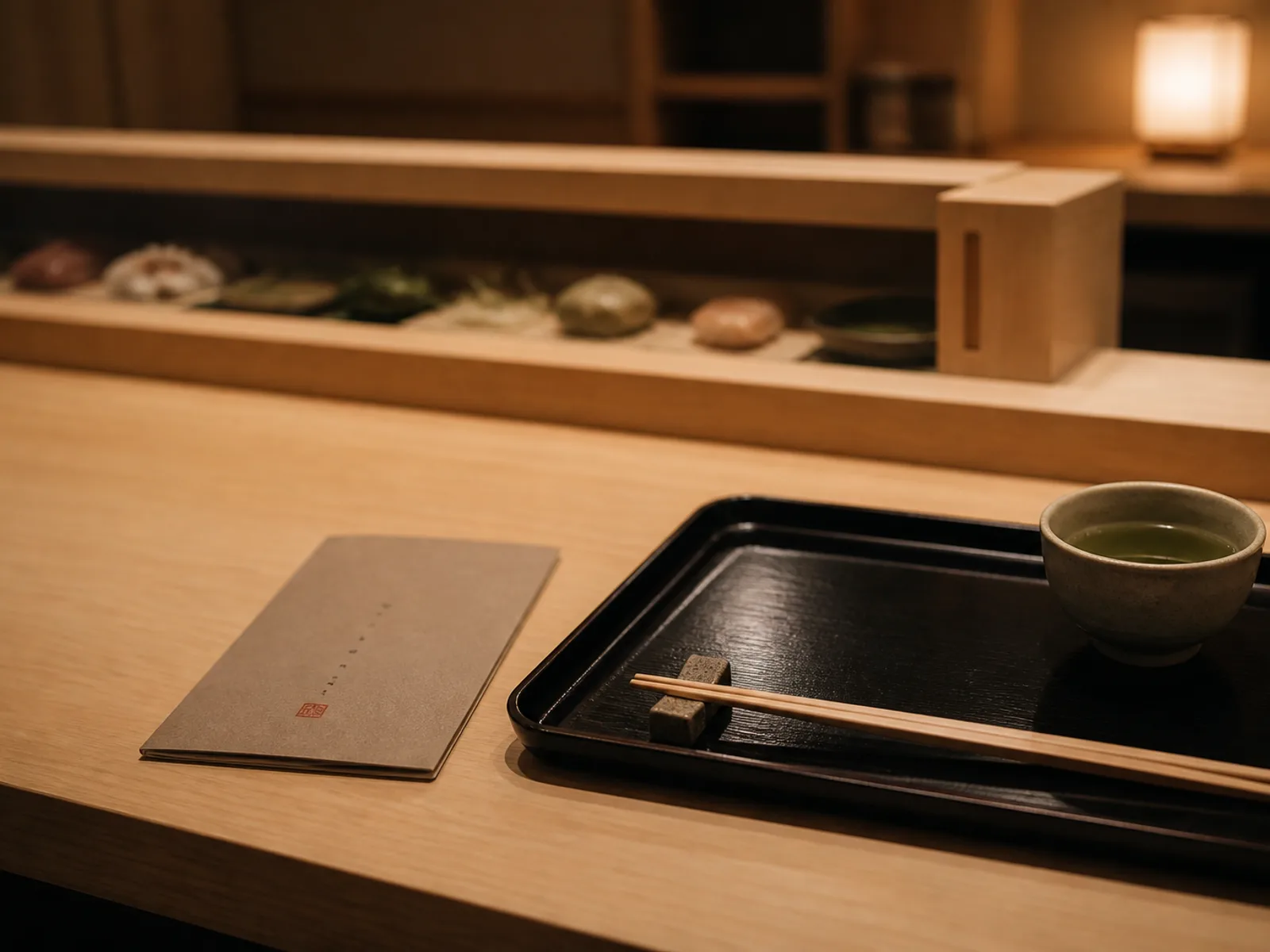
Paste it as is, or use it as a starting point and describe your own room.“Omakase sushi counter, washi paper texture, black ink and a single vermilion seal, numbered nigiri list in two columns, small photos for signature rolls, Japanese names in a smaller line under the English.”
Numbers make ordering easier
Sushi and dim sum menus with numbered items speed up service. Ask for numbering and the AI adds consistent numerals, aligned so guests can point and staff can read.
Photos, but with discipline
Upload photos of your signature rolls in the Content tab and attach them to dishes. The layout uses a few well-cropped images rather than a photo per dish, keeping the menu calm.
Bilingual by default
Japanese, Chinese, Thai or Vietnamese names sit under the translated dish in a smaller line; the parser recognises 'Name (Original)' patterns and the AI sets them in two levels.
Tips for this venue
- ✦ Type '12. Sake nigiri – salmon – 4.50' and the parser keeps the numbering.
- ✦ Ask for 'one vermilion accent only' to keep the zen restraint.
- ✦ Use a folded A4 for sushi + hot dishes + drinks; a single A5 for the lunch bento.
- ✦ Attach at most six photos; the design will place them as a quiet grid.
Common questions
Yes. Numbering in the pasted text is preserved, or ask the AI to number a section.
Yes. Attach photos to dishes in the Content tab; the AI places a restrained selection so the page stays legible.
Japanese and Chinese glyphs render in the preview and PDF when written in the dish name; fonts fall back to a system CJK face. Keep them short for best results.