Burger restaurant menu design: builds, combos and the veggie line
How to design a burger menu that orders fast: the build written top to bottom, six to nine burgers, combo pricing that adds up and a veggie line with equal billing.
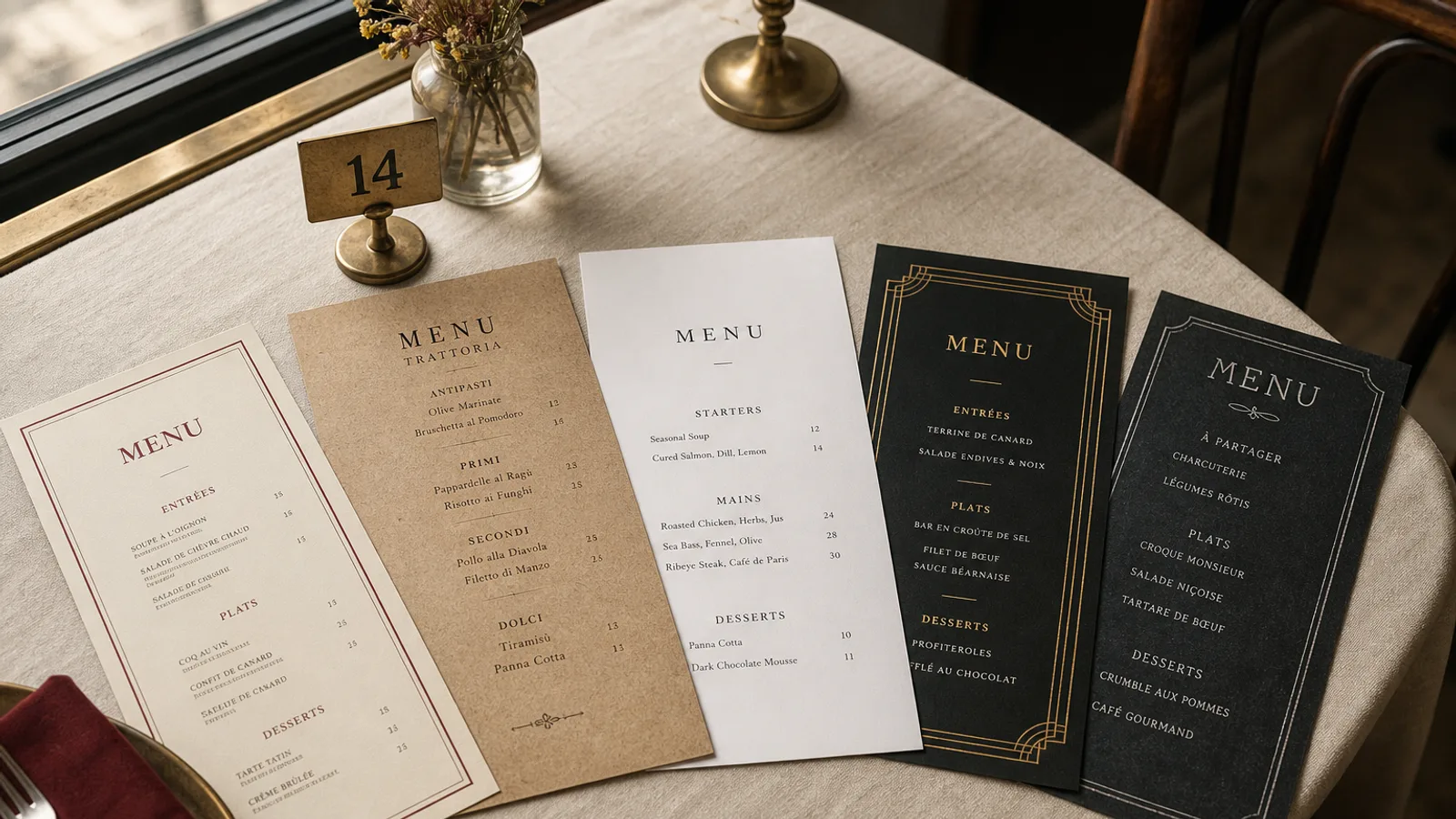
Every burger on your card is the same shape. Bun, patty, cheese, something crunchy, something saucy, bun. The design problem is not variety; it is making six or nine near-identical objects distinct enough to choose between, in under a minute, while a combo price quietly does the selling. Here is how to write a build so it reads in order, how many burgers a card can carry, why the combo line is the most important sentence you will print, and how to give the veggie burger a fair place without turning it into a footnote.
Write the build the way it is stacked
A burger descriptor should read from top bun to bottom bun, or from patty outwards, and it should do the same on every line. "Double smashed beef, American cheese, pickles, white onion, house sauce, potato bun" is a build. "Our signature burger with all the trimmings" is a wish. Guests compare burgers by scanning for the two or three words that matter to them (bacon, blue cheese, jalapeño), and a consistent order lets them find those words in the same place on every line.
Set the burger name at 12 pt bold or semibold, the build at 9.5 to 10 pt regular, the price right after the build. Name the patty weight once, in a line under the section heading ("all beef patties 2 × 80 g, cooked medium unless asked"), not on every burger; it saves twelve words per line and the card stops looking like a butcher's list.
Six to nine burgers, one of them yours
The cards that sell best carry six to nine burgers: two or three classics, two or three house builds, one big one, one chicken, one or two vegetarian. Beyond nine, guests default to the cheeseburger because reading is harder than choosing. Give the signature burger the top of the section and a two-line descriptor; everything else gets one line.
Resist the build-your-own grid. A matrix of patties, cheeses and toppings looks generous and slows every order to a crawl. Offer three or four extras at the bottom of the section ("add bacon 2 €, extra patty 3.50 €, fried egg 1.50 €") and let the builds do the rest.
Sauces and heat
Name your sauces and say what they are: "house sauce (mayo, ketchup, pickle brine, smoked paprika)". A named sauce is a reason to come back. For heat, use a single word on the line (mild, medium, hot) rather than chilli icons, which are unreadable at 9 pt and never mean the same thing to two guests.
The combo line: where the ticket is decided
One box on the card matters more than any burger: "Make it a meal: any burger + fries + drink, 4.50 €". Written as an add-on price rather than a total, it feels small and is chosen by the majority of guests. Place the box directly under the burger section, in a rule or a tinted panel, in a size between the burger names and the section heading. Everything in the box should be unambiguous: which fries, which drink sizes, whether a craft beer is a supplement.
- Price the combo so the saving against separate items is 1.50 to 2.50 €; smaller savings feel like a trick, larger ones devalue the sides.
- Offer one upgrade only ("swap to sweet potato fries 1.50 €"). Two upgrades become a decision tree.
- Keep the combo price the same for every burger; a variable combo defeats the purpose.
The veggie line: equal billing, not a footnote
Vegetarian and vegan burgers are now ordered by a third of the table in many cities, often by people who also eat meat. Cornell's menu research has long suggested that labelling a dish as the vegetarian option depresses its uptake among non-vegetarians. So do not build a separate section headed "Vegetarian" at the bottom. Put the veggie builds in the main burger list, in the same typeface and the same position logic, and mark them with a small V after the name. Write the build with the same appetite as the beef: "Charred portobello, smoked gouda, crispy onions, garlic aioli, brioche" sells; "Veggie burger" does not.
One honest line under the section heading about how the veggie patties are cooked (separate grill or not) saves questions and is a matter of trust for strict vegetarians.
Sides, drinks and the allergen key
Fries need three lines at most (regular, loaded, sweet potato) with prices. Shakes and sodas go in a compact drinks block; if you serve beer, list four, with the ABV and the size in cl. Gluten (buns), milk (cheese and sauces), egg (mayo, brioche), sesame (buns again) and mustard cover most of a burger card under Regulation 1169/2011; a numbered key per line and a legend for the 14 allergens on the back keeps it compliant without cluttering the builds.
Board, laminate and the grease test
Burger tables are greasy and ketchup travels. A 350 g matte board in A5, printed both sides, survives a service and wipes clean; a soft-touch finish resists fingerprints better than an untreated matte. Gloss lamination is durable but cheap-looking and reflects the pendant lights most burger bars use. Reprint every eight to twelve weeks rather than laminating for a year: prices move, and a card that has aged is the first thing a guest notices.
In Menu Atelier the Modern Minimal and Café Chalk styles both handle a burger card cleanly; you can set the combo box as a tinted panel, keep the veggie builds in the main list, preview the A5 double-sided card in 3D and download a 300 dpi PDF with bleed and crop marks, or order the run printed on 350 g matte board.