Catering and event menus: the proposal card that wins the booking
How to design a catering proposal card that a client can approve in one sitting: packages, options, allergens and a look that matches the night, not a Word export.
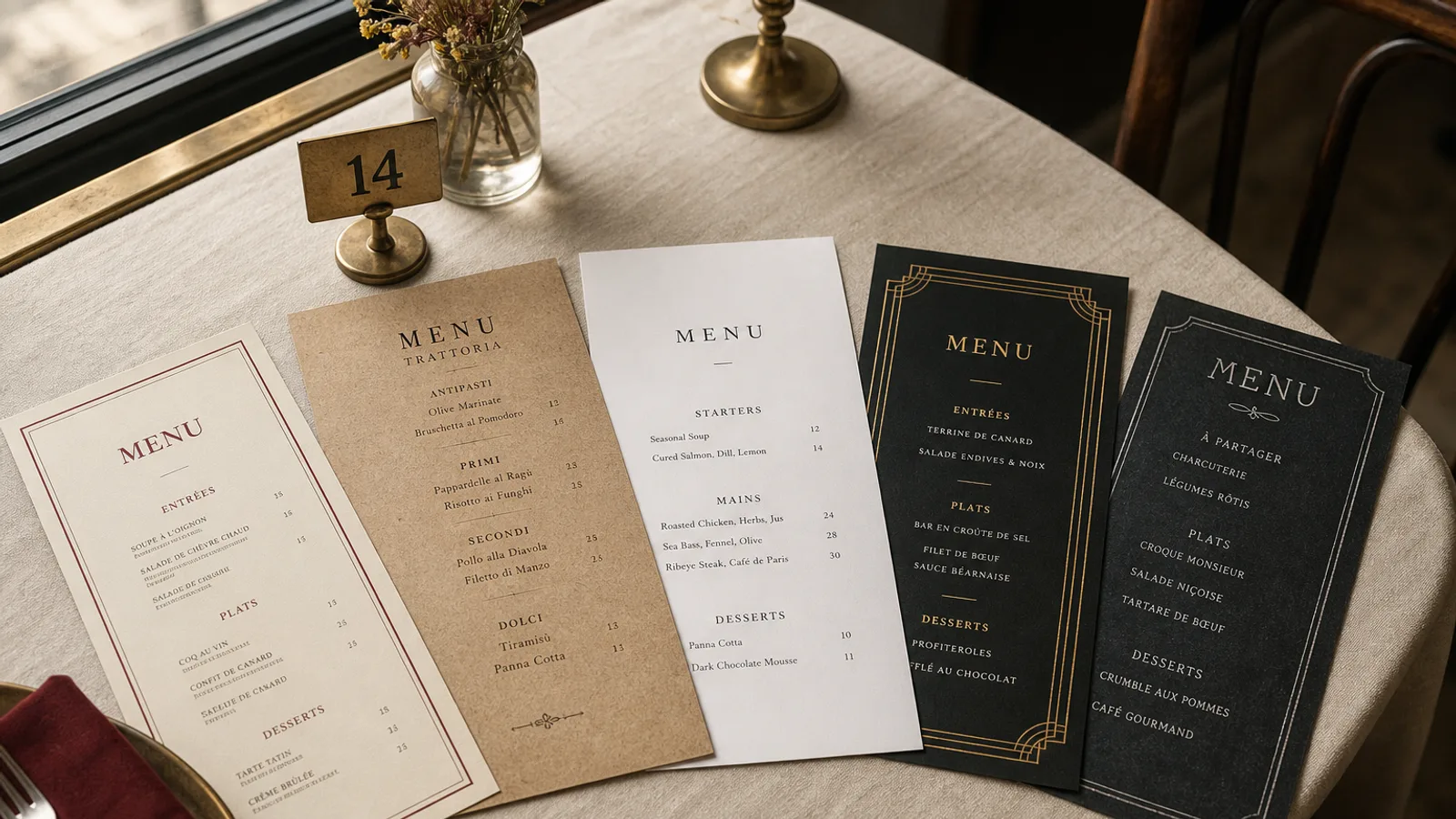
A catering menu is read twice: once by the person who books, often at a desk, and once by the guests who eat. Most caterers print the first as a Word export and the second as an afterthought on the night. The proposal card is a sales document that has to feel like the event. If it looks like a quote, you will be compared on price alone. If it looks like a dining-room menu and hides the choices, the client will email for a spreadsheet. Design for the booking first, then reuse the type for the table.
Packages before poetry
Open with two or three named packages and a price per person, stated once, with what is included in plain words: number of canapés, number of courses, service staff ratio, linen, the cheap things people fight about later (water, coffee, cake cutting). "Garden party, 65 € per person, 6 canapés, 2 courses, still and sparkling water." That line wins more bookings than a paragraph about seasonal produce. Put the packages in a table or a set of three equal columns so the client can compare without a phone call.
State the minimum number of guests and the service window ("from 40 guests, service 19.00–23.00"). Hidden minima are how proposals die in the second email. If a package can be upgraded (a cheese course, a late snack), list the upgrades as a short add-on block with a per-person figure, not as "ask us".
Choices the client can actually make
Under each package, offer a controlled choice: two starters, pick one; two mains, pick one, plus a vegetarian default; two desserts, pick one. Print the dishes as you would on a restaurant card: name, two or three components, no novel. If the kitchen can swap within a family (fish for fish), say so once. An open "build your own menu from our 40-dish bible" is how you spend three weeks in revisions and print nothing.
- Dietary variants (vegetarian, vegan, gluten-free, child) as a named plate in each course, not as a promise to improvise on the night.
- Drinks as packages too: welcome drink, wine with dinner (one white, one red, a sparkling), or a cash bar. List the wines you will actually pour, or say "our sommelier confirms two weeks before".
- A timeline block (arrival, speeches, service, cake, late bite) in 9 pt. Clients who see the night on the card stop inventing a fourth service.
The table card is a descendant, not a twin
On the night, guests should see a short card: the sequence they will eat, without prices, without the rejected options, without the 65 €. Same type family and paper as the proposal, stripped to titles. A wedding or a corporate dinner does not need the vegetarian variant printed on every table if that guest has a discreet mark; a banquet of 200 might need a small symbol. Do not reprint the full proposal as a souvenir. It looks like a quote left on the plate.
Place cards, a menu in a holder, and an A5 at each cover are enough. If the event is a standing reception, a single A3 or two A4s on a buffet are better than a card nobody has a hand free to hold. Match the paper to the room: 350 g matte, soft-touch, cream or a colour sampled from the invitation, not a gloss that flashes under uplights.
Allergens belong in the proposal, not only on the night
Regulation 1169/2011 applies to catered food. The booking client needs the 14 allergens before they sign, so they can collect guest information. Print a key on the proposal (numbered after each dish, legend on the back) and a one-page allergen sheet you can email. On the night, the chef and the floor need the same key; the guest card can stay clean if the service is briefed. A QR code as the only allergen source at a black-tie dinner is how you get a scene at table twelve.
Type that survives a PDF and a printer
Proposals travel as PDFs. Design in real type, not in a default office face, and export a print-ready PDF (300 dpi, 3 mm bleed) even if the first send is on screen. 11 pt minimum for dishes, 9 pt for the legal and the small print on cancellation. One serif for the event name and dish titles, one grotesque for prices and package names. Avoid a wedding script on the body: it dies at 10 pt and looks like a stationery shop. Leave a clear space for your mark and the client's event title so the same file can be reused.
If you quote often, build a template with locked package columns and a dish library you swap. That is faster than a new InDesign file for every couple, and it keeps the brand consistent when three people in the office send proposals on the same Friday.
Print the proposal like you mean the booking
A printed proposal, two or four A5 or A4 faces, handed in a meeting or posted, still closes more events than a link. 350 g matte, the same stock you will use on the table, so the client is already holding the night. Short run is fine; you will reprint the table cards anyway once the choices lock. Date the proposal and put a validity window on the prices ("valid 30 days"). Food costs move; a card that pretends they do not will hurt you in September.
In Menu Atelier you can set the package columns, drop in the dishes, and switch the same design from an A4 proposal bifold to an A5 table card without prices. Check both in 3D, download a 300 dpi PDF with bleed and crop marks, or order the table run on 350 g matte board with a scored fold.