How often should you reprint your menus?
How often to reprint restaurant menus: wear, price changes, allergen updates and a reprint calendar by room size so you stop throwing away half a box.
The menu that leaves the pass at eight o'clock on a Saturday has already been folded, stacked, wiped and pinched at the corners three hundred times since you collected the box. Guests do not clock the crease; they clock the feeling that the room has let itself go. Reprinting is not a design event. It is maintenance, like changing the oil in the fryer, and it has three clocks that almost never ring on the same day: the paper wears out, the dishes move, and the law does not wait.
The wear clock: when the object is finished
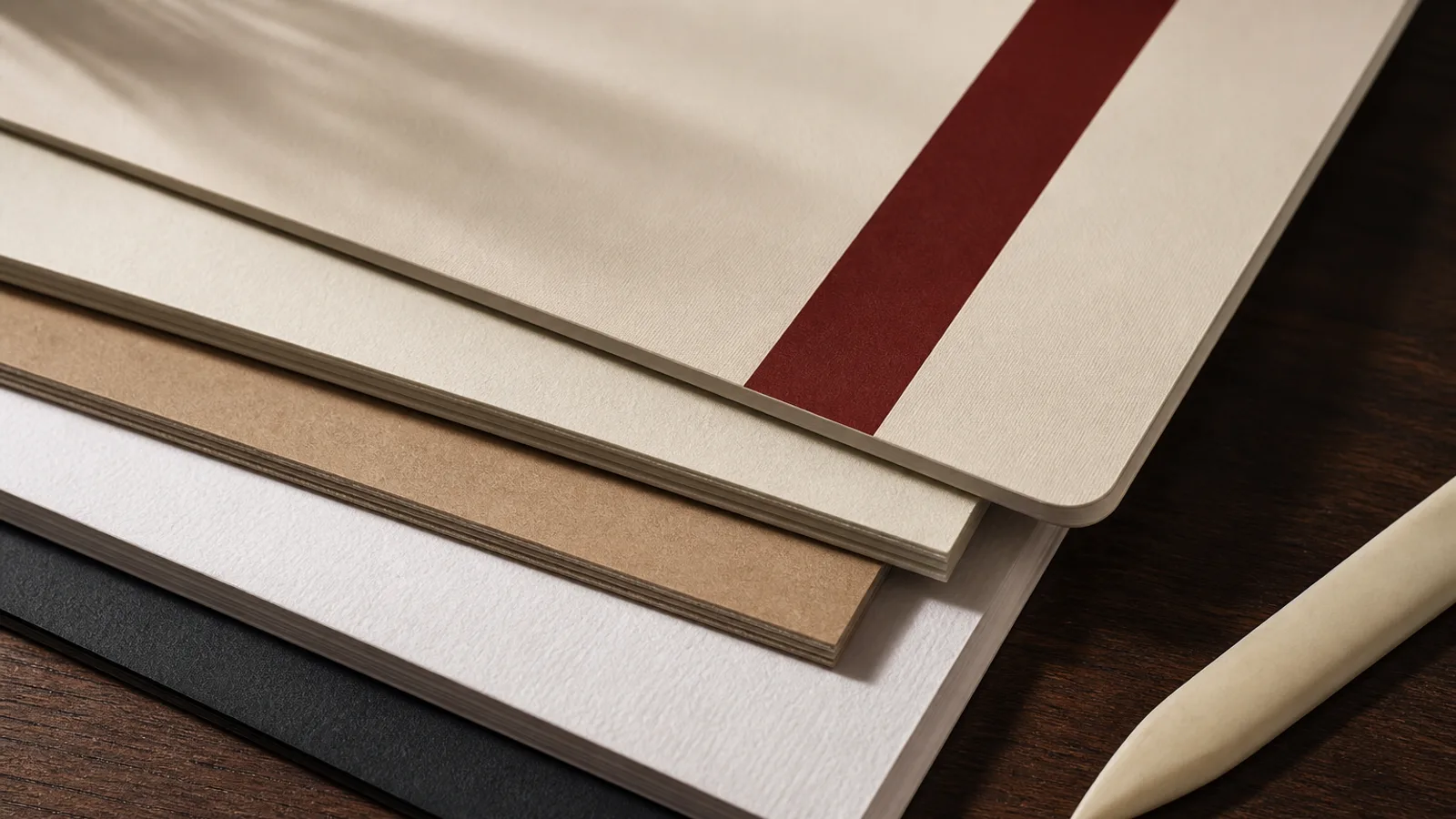
350 g board with a soft-touch film and a scored fold will look intentional for three to six months in a busy 40-cover room if the staff treat it as an object, not a tray liner. Uncoated 300 g without a coat starts to grey at the edges in four to eight weeks. 170 g silk looks tired the first time someone puts it down on a wet table. Those ranges assume the menu is collected at the end of the meal and stacked dry. If it lives in a puddle of condensation under a water jug, divide every number by two.
Walk the room once a week with the same eye you use on glassware. A menu comes out of service when the fold has a white crack, when a corner has delaminated, when a thumbprint has become a permanent shadow, or when the sheet no longer lies flat. Do not wait until half the stack looks like that. Pull the worst ten and you have just told the remaining thirty they have a month left.
Covers matter. A room that turns 1.8 times on Friday and Saturday will chew through a stack faster than a tasting-menu room that seats 24 once. Count covers, not calendar months. A useful starting figure: one reprint of the physical object every 90 to 120 days for a neighbourhood bistro on 350 g coated stock, every 60 days on uncoated, and on demand for anything thinner.
The content clock: dishes, prices, allergens
Paper that still looks new is not a reason to keep a stale line. A crossed-out price in biro is a confession. A sticker over last season's turbot is worse: it tells the guest the kitchen is improvising and the front of house is covering. When more than two dishes or three prices have moved, reprint. Before that, an insert is cleaner than a defaced card.
Allergens are not a style choice. Regulation 1169/2011 requires the 14 allergens to be available in writing. If your printed carte is the written source, a recipe change that adds milk, nuts or gluten is a reprint the same week, not at the next reprint window. Rooms that change the board often should keep the volatile part on a dated insert and the stable part on the durable carte. That is a reprint strategy, not a graphic one.
Seasonal rewrites are the honest rhythm for most European rooms. A spring carte in March, a summer carte when the tomatoes arrive, an autumn carte when the game comes in, a winter carte before the holidays. Four content reprints a year is normal. If you also reprint for wear, you may fold the two clocks together: the March rewrite is also the moment the winter stack, already tired, leaves the building.
A reprint calendar by type of room
A 40-cover bistro with a seasonal carte: print 50 to 70 food menus four times a year, plus a small mid-season top-up if covers are high. Wine list: twice a year unless the list is short and stable, in which case once plus a dated by-the-glass slip. Desserts: a table tent or a half-sheet you can afford to throw away monthly.
A trattoria or brasserie that barely changes the staples: the physical wear clock dominates. Print a larger run of the food carte twice a year on 350 g, and keep a cheap lunch formule as a separate sheet you reprint weekly or daily. Do not print the lunch formule on the same board as dinner; you will hate the waste.
A tasting-menu room: the sequence card is a short-run, light-stock job, sometimes weekly. The cover or the wine book is a once-or-twice-a-year object. Mixing those two jobs on the same paper weight is how you end up with a beautiful tasting card in the bin on Tuesday.
- Neighbourhood bistro, seasonal carte: four content reprints a year, wear check every month, 50–70 copies a run.
- Stable brasserie: two food-carte reprints a year on 350 g, lunch sheet on cheap stock as often as the formule moves.
- Tasting room: durable cover once or twice a year, tasting card on 170–250 g as often as the sequence changes.
- Wine-led room: food carte on the seasonal clock, list reprinted when more than a handful of bins move, glass list as a slip.
What to reprint and what to slip in
The whole carte should be reprinted when the structure changes: sections move, the story at the top is rewritten, the type or the paper is no longer the one you want guests to remember. Daily specials, a changed soup, a sold-out fish, a temporary price on the Côte-Rôtie: those are inserts, chalkboard lines or a dated half-sheet clipped to the inside flap. Reprinting 60 bifolds because the soup changed is how boxes of dead menus accumulate in the office.
Build the layout so an insert has a home. A bifold with a 10 mm inner margin can take a 90 × 210 mm slip without looking taped on. A single A4 with no margin cannot. If you know you will write a daily line, design the hole for it now; do not invent a home on a Saturday at noon.
How many copies, really
Print covers plus a reserve, not a year of stock. For 40 covers and a 1.4 turn, you need about 40 menus in the room and 15 to 25 in the drawer for stains, walk-outs and the night the extra table goes out on the terrace. That is 55 to 65, not 200. The leftover 135 from a vanity run will still be in the cupboard when the next rewrite arrives, and you will print again anyway.
Digital short-run makes that number rational. The unit price at 60 copies is higher than at 250; the year is cheaper. If a quote only looks good at 250, you are being priced for a hotel, not a dining room that changes its mind.
Make the next reprint a date, not a mood
Put the next reprint on the same calendar as the next wine order. Pick the week the new carte is written, count back eight working days for print and delivery, and treat that date as firm. Waiting until the stack looks embarrassing is how you spend a Friday night with fifteen good menus and twenty wrecks.
In Menu Atelier you can switch the same design from A4 to A5, single sheet to bifold, in one click and see it in 3D before you commit, then order a short run on 350 g matt board with a soft-touch finish, 99 € plus 10 € a copy, delivered in 5 to 8 working days. That turnaround is what makes a 60-copy seasonal reprint a habit instead of a project you postpone until the corners give up.