Laminated menus: pros, cons and the alternatives worth considering
When lamination makes sense for a restaurant menu and when it hurts: durability, glare, cost, the plastic look, and the alternatives from heavy board to synthetic paper.
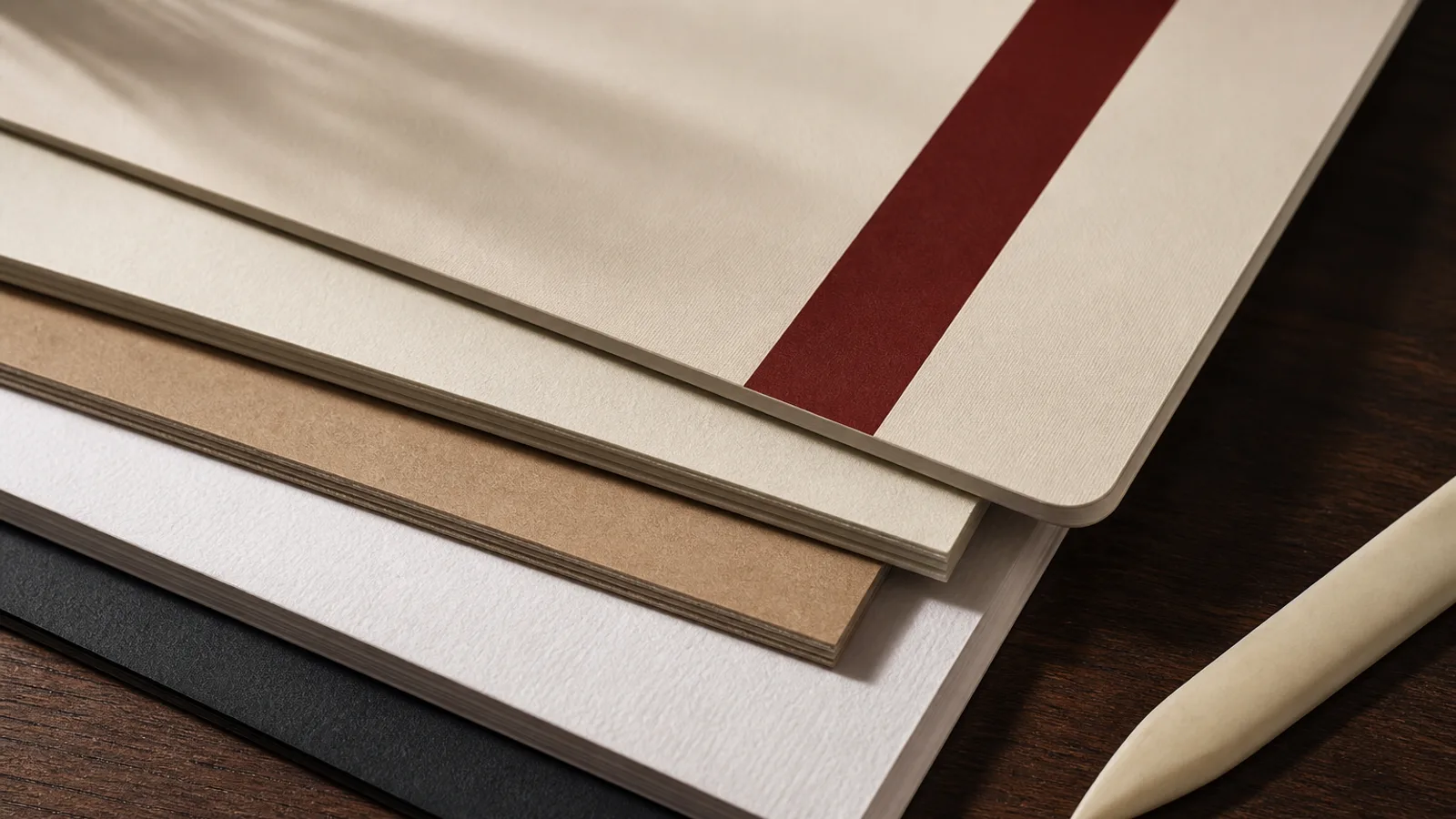
Ask ten restaurant owners why their menus are laminated and nine will say durability. Ask their guests what they think of laminated menus and most will say nothing, because a laminated menu is invisible, which is either the point or the problem depending on your restaurant. Lamination solves real issues: spills, grease, a menu that has to survive six months. It also creates some: glare, a fixed price list, and a feel that most people associate with a motorway service station. Here is an honest account of both sides and the options that sit in between.
Two things called lamination
The word covers two different processes. Film lamination bonds a thin plastic film, usually 25 to 40 microns, to one or both sides of the printed sheet, then the sheet is trimmed to size. The edges of the paper are exposed. This is what a printer means by matte laminate or soft-touch laminate; it protects the surface, adds stiffness and does not look like plastic.
Encapsulation, sometimes called pouch lamination, seals the sheet inside two thicker films, typically 75 to 250 microns each, with a sealed plastic border extending 3 to 5 mm beyond the paper. This is the fully wipeable, waterproof object most people picture when they hear laminated menu. It is also the one that looks and feels like plastic, because it is.
What lamination genuinely does well
- Liquids: an encapsulated menu shrugs off a spilled glass of wine. A film-laminated menu resists surface moisture but will swell at the exposed edges if left wet.
- Grease and fingerprints: both types wipe clean with a damp cloth, which uncoated paper never does.
- Lifespan: a laminated menu in daily use lasts six to twelve months against eight to twelve weeks for unlaminated 300 g board.
- Stiffness: a 25-micron film on both sides of 300 g board makes it feel like 350 g and stops corners curling in humid rooms.
- Unit cost over time: if the menu does not change, one laminated print at 4 to 6 € per A4 sheet beats three or four reprints of unlaminated board.
What it costs you beyond the invoice
The first cost is glare. Gloss encapsulation reflects every light source in the room; matte film is much better but still slightly shinier than bare matte paper. In a dim dining room a glossy laminated menu is genuinely harder to read than a matte board, and guests will tilt and squint without ever articulating why.
The second is rigidity of content. A laminated menu is a commitment to a fixed list and fixed prices. The moment a supplier raises the price of beef or a dish leaves the menu, the choice is between a sticker on plastic, which looks worse than almost anything, and throwing away a menu you paid to make permanent. Restaurants with laminated menus systematically delay price adjustments and menu changes for this reason, and the delay costs more than the lamination saved.
The third is the signal. Encapsulated menus are associated with venues where the menu is a fixed operational tool: cafeterias, chains, roadside restaurants. That is not a judgement on those venues; it is a description of what the object communicates. If your restaurant is trying to say fresh, seasonal, made by people, a sealed plastic menu is working against the rest of the room.
There is also an end-of-life issue. Encapsulated menus cannot be recycled with paper because the film and fibre cannot be separated; they go to general waste. Film-laminated board is in a grey zone and is rejected by many municipal streams.
Where lamination is still the right call
Some contexts justify it without apology. Outdoor terraces where menus get rained on. Beach bars, pool bars, ice cream parlours where hands are wet and sticky. Venues serving children in volume. Fixed menus that genuinely do not change for a year, such as a drinks list at a hotel bar. Cocktail menus that live on the bar and meet a wet surface every night.
In those cases choose matte film over gloss, keep the film weight modest, 75 to 125 microns for encapsulation, and round the corners with a 3 to 5 mm radius so the plastic edge does not cut or fray. Print the version date discreetly in a corner so you can tell which batch is which when a change eventually comes.
The alternatives, from cheapest to most durable
Between bare paper and full encapsulation there is a range of options, and most restaurants are better served by one of them.
- Heavier board, no lamination: 350 g matte board resists handling far better than 250 g, folds cleanly when scored, and costs little more. Replace it every season, which you should be doing anyway.
- Soft-touch or matte film lamination on 350 g: surface protection against fingerprints and light moisture, a premium feel, no plastic look. The compromise most upmarket restaurants land on.
- Menu covers: a leather, linen or board folder with clear corners or a clip, holding cheap printed inserts. The cover lasts years and communicates quality; the insert changes whenever you want at a few cents per sheet.
- Synthetic paper: polypropylene-based sheets that print like paper and are waterproof and tear-resistant without a film. Matte finish, no glare, looks like heavy paper. Two to three times the cost of board per sheet, but no lamination step and fully wipeable.
- Full encapsulation: for the wet and outdoor cases above, and nowhere else.
Match the protection to how often the menu changes
The right question is not how durable the menu should be but how long this version will be correct. If prices and dishes change every twelve weeks, a menu that lasts twelve weeks is exactly durable enough, and that is 350 g board, laminated or not. If the menu will be identical for a year and lives outdoors, encapsulate it. Paying for permanence you then have to throw away is the most common waste in menu printing.
Menu Atelier prints on 350 g matte board with a soft-touch finish, which is the middle option above: protected against handling, no glare, no plastic feel, and cheap enough to reprint each season. Because the design lives online and the print-ready PDF regenerates in a minute, the reprint habit that lamination discourages becomes the easy default.