Seasonal menu rotation: how often to change it and how to announce it
A working rhythm for seasonal menu changes: which dishes rotate, which stay, how many times a year to reprint, and how to signal the new season on the page.
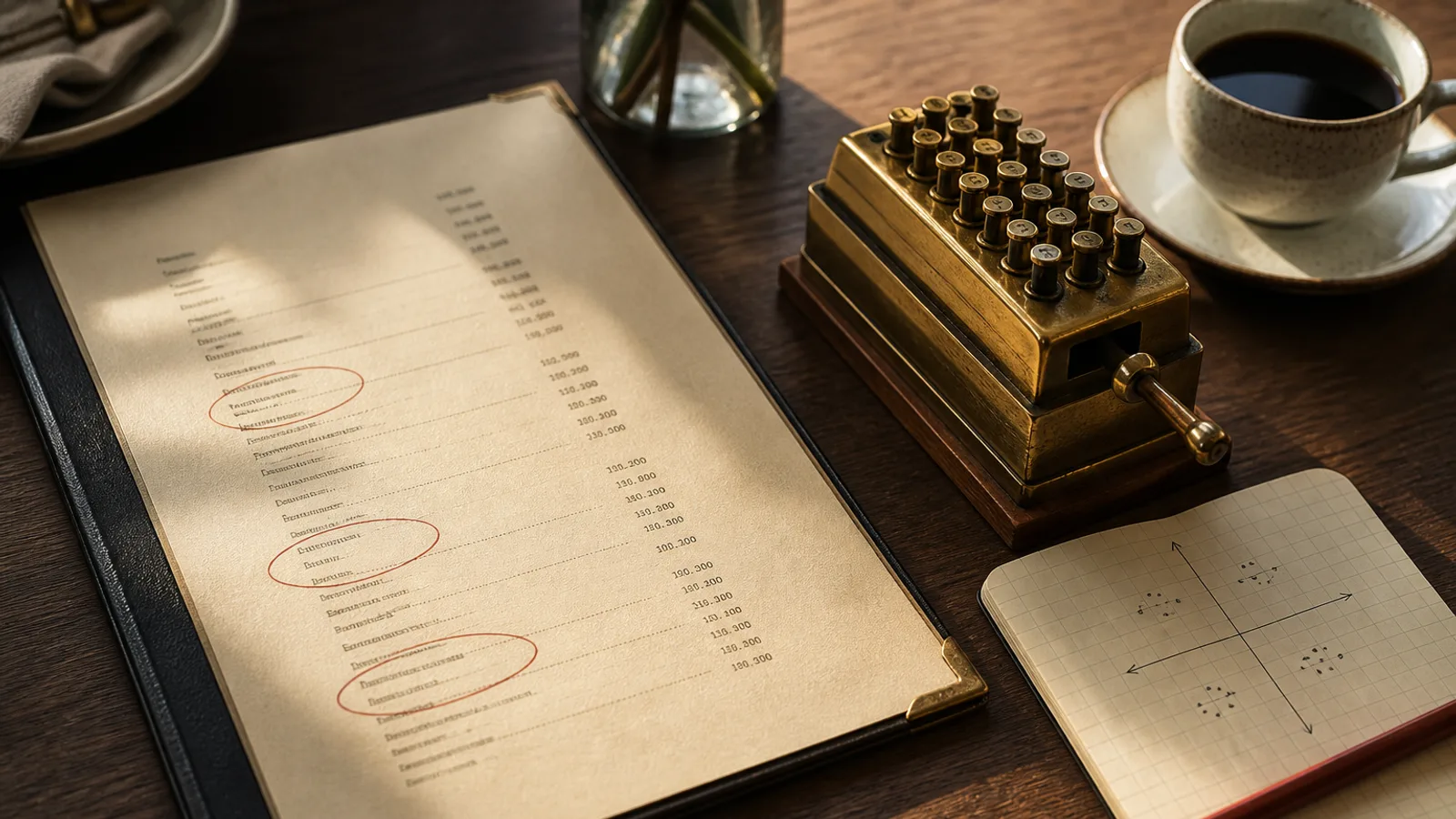
There are two ways to run a seasonal menu badly. The first is to never change it, so the tomato salad is still there in January and regulars stop looking. The second is to change it so often that the kitchen never masters a dish, costs never settle and the printed menu is always out of date. Between those two failures there is a rhythm that works for most independent restaurants, and it can be described precisely: what rotates, what stays, when, and how the menu itself tells the guest that something is new.
Four seasons is the default, but the calendar is not the produce
A four-change year, roughly at the equinoxes and solstices, is the rhythm most kitchens can sustain. It gives each menu 12 to 13 weeks to bed in, long enough for staff to sell it well and for you to collect meaningful sales data. But the produce does not follow the calendar exactly: asparagus arrives in April and is gone by June, game starts in October, citrus peaks in February.
The practical answer is a two-layer menu. A core of 60 to 70 % of dishes changes four times a year on fixed dates you can plan reprints around. A smaller layer of 3 to 6 dishes changes every 4 to 6 weeks and lives on an insert, a chalkboard or a single printed card. The core gives you stability; the layer gives you the asparagus.
Decide what rotates using sales data, not sentiment
Before each change, pull the sales mix for the outgoing season and sort dishes by two columns: units sold and contribution margin in euros. The classic menu engineering grid puts every dish into one of four boxes, and each box has a seasonal decision attached.
- High volume, high margin: keep. If the key ingredient is going out of season, re-engineer the dish around a replacement rather than dropping it.
- High volume, low margin: keep, but fix the cost. A seasonal change is the natural moment to swap an expensive component or adjust the portion without anyone noticing a stealth change.
- Low volume, high margin: this is where seasonal dishes usually sit. Give them a better position on the page and a better description before you give up on them.
- Low volume, low margin: remove. Every seasonal change should retire at least two of these so the menu does not grow.
The last point matters more than people think. Menus creep. A 28-dish menu that adds three seasonal dishes each quarter and removes none is a 40-dish menu in a year, with the layout and the prep list to match.
Plan the reprint around the change, not after it
A seasonal change is a design event, and design takes longer than deciding the dishes. Work backwards from launch day. Recipes and costs locked three weeks before; menu text and prices finalised two weeks before; proof printed and read aloud by two people ten days before; print files sent eight working days before launch so that delivery, even at the slow end of a 5 to 8 day window, lands before the first service.
Order the right quantity. For a 60-seat restaurant, 30 to 40 menus per season covers wear and loss if the paper is 300 g or heavier. Ordering 100 because the unit price drops is false economy when 60 of them go in the recycling in June. Reprinting four times a year at around 10 € per menu is a cost of roughly 1,400 € a year, which is less than most restaurants spend on a single month of flowers.
How the page should say the season has changed
Regulars do not reread a menu they think they know. The design has to give them a reason to look. The obvious tool is a small season label on the cover or at the top of the first page: Printemps 2026, Autumn Menu, or simply the month. It costs nothing and it is the single most effective signal that something has changed.
Inside, mark new dishes discreetly. A short word in small caps or a light italic, new this season, set in the same colour as the section headings, is enough. Avoid stars, badges and coloured boxes; they read as promotion and cheapen the rest of the page. Two or three such labels per menu is the limit; beyond that the word loses its meaning.
You can also let the palette shift. Keep the typography, grid and logo identical across the year so the menu is recognisably yours, and change one accent colour or one photograph per season. A deep green in spring, a burnt orange in autumn. Guests may not name the change, but they notice it.
Announce it outside the menu too
The menu is the last place a guest learns about the new season; the announcement should have happened before they sat down. A photograph of one new dish on your social accounts the day of launch, a line on the website and a sentence in the reservation confirmation email are all free. Train the floor staff to name two new dishes when they hand over the menu; that sentence sells more seasonal food than any typography.
Keep a copy of every seasonal menu, printed and as a file. After two years you have a record of what you served, what it cost and how it was laid out, and planning the next spring menu becomes a matter of opening last spring's file rather than starting from a blank page.
Make the seasonal change routine rather than a project
The restaurants that rotate well are not the ones with the most creative kitchens; they are the ones where the change is boring. The dates are in the calendar, the sales report is pulled the same way each time, the print files are generated from the same template, and the only real work is choosing the dishes.
Tooling helps here. In Menu Atelier the design lives independently of the dish list, so a seasonal update means editing the dishes, regenerating, checking the result in 3D and exporting a new print-ready PDF with bleed and crop marks already in place. If you want the season's printed copies delivered, print and ship runs 99 € plus 10 € per menu, on 350 g matte board with a soft-touch finish, in 5 to 8 working days across the EU, which fits comfortably inside the three-week countdown above.