Vegan and vegetarian restaurant menus: leading with the food, not the label
How to design a plant-based restaurant menu that sells on appetite: ingredient-led names, no apologetic labels, visible protein, allergen keys and a restaurant-grade layout.
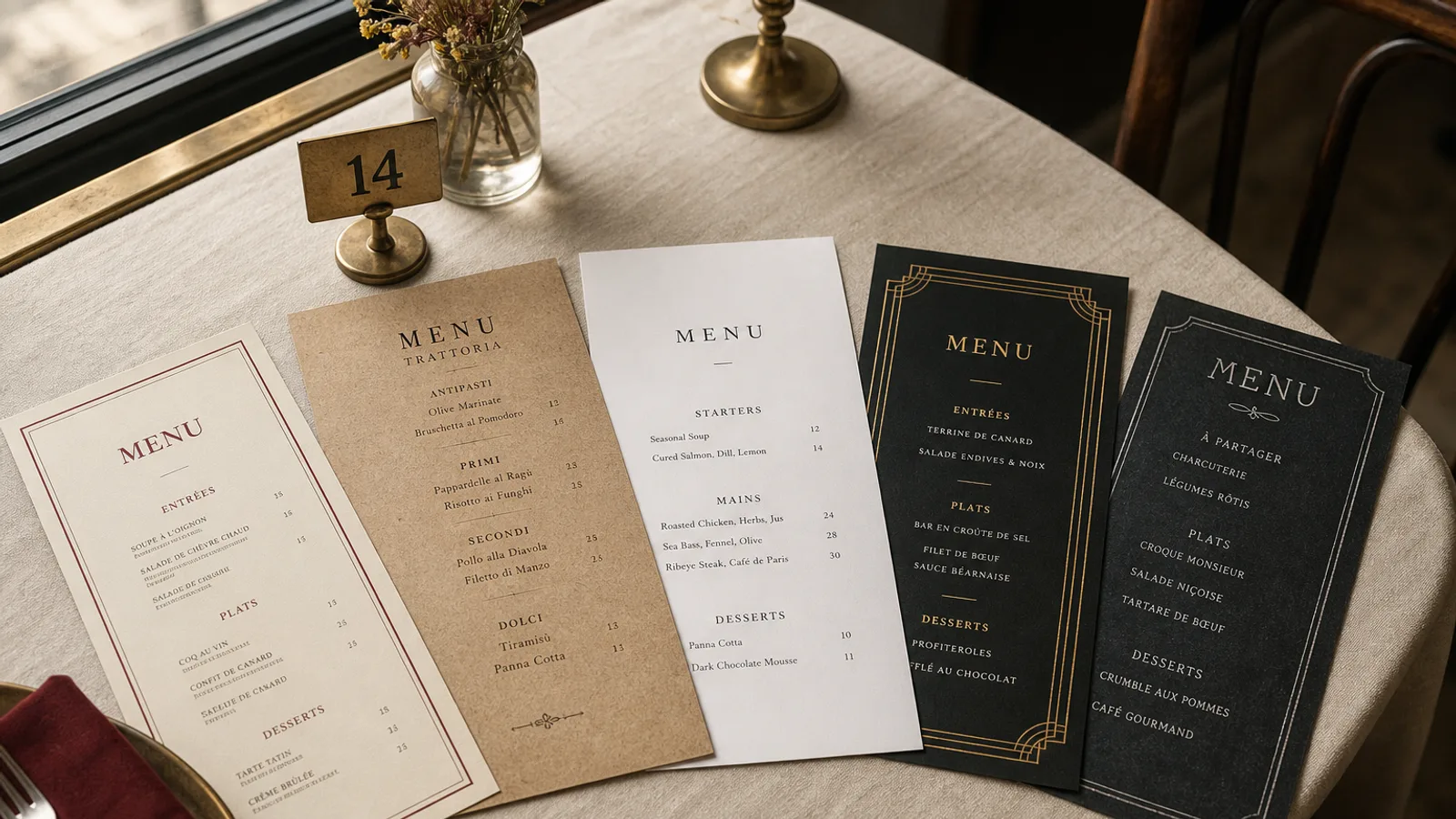
In a fully vegan or vegetarian restaurant, the word vegan on the menu is redundant. Everyone in the room knows. Yet many plant-based cards still read like a list of substitutions: vegan cheese, meat-free burger, dairy-free dessert. Each of those phrases describes what is missing. The cards that fill tables describe what is there. This is a guide to writing and laying out a plant-based menu around ingredients, technique and appetite, with the practical details on protein, allergens, pricing and format that this kind of restaurant needs.
Drop the label, name the ingredient
Cornell's menu research and the wider work on descriptive labelling agree on one point: specific, sensory names sell more than category names. "Charred hispi cabbage, miso butter, toasted hazelnuts" outsells "Vegan cabbage dish" every night. Lead every line with the main ingredient and its technique (charred, slow-roasted, smoked, pickled), follow with two or three supporting elements, then the price. No "vegan", no "plant-based", no "alternative" anywhere in the dish lines.
Substitutes deserve care. If you use a cashew cream or a house-made seitan, name it as an ingredient in its own right ("cashew cream", "smoked seitan"), never as "vegan cream" or "fake meat". If you use a branded meat analogue, decide whether the brand name adds trust in your market; often the description of what it tastes like does more.
A structure guests recognise
Plant-based cards sometimes abandon the starter-main-dessert structure in favour of bowls and plates without hierarchy. Guests who eat out often find this tiring: they have to work out how much to order. Keep a recognisable structure, adjusted for how vegetables are actually eaten:
- Snacks and things for the table: olives, breads, dips, 4 to 7 €.
- Small plates and starters: raw, pickled, fried. Six to eight items.
- Mains: four to six substantial plates, each with a visible protein and a visible carbohydrate, 16 to 24 €.
- Sides: two to four, so a table can build a fuller meal.
- Desserts: four, at least one that is not chocolate and one that is not fruit.
If your kitchen prefers a sharing model, say so in one line at the top and give the recommended count, as any sharing restaurant should.
Make the protein visible
The most common private worry of a mixed table in a vegetarian restaurant is whether they will leave hungry. Answer it in the descriptors. Every main should show its protein (chickpea, lentil, tofu, tempeh, seitan, beans, nuts) and its carbohydrate (potato, rice, bread, grain) within the first six words. "Slow-roasted celeriac, white beans, salsa verde, grilled sourdough" reassures; "Celeriac steak" does not, even though it is the same plate.
- Avoid meat words for vegetables (steak, wings, ribs). They set an expectation the plate will not meet and they make the card sound defensive.
- Give weights or counts where they help: "tempeh, 150 g" or "3 stuffed onions".
- Write one line under the mains heading about portion philosophy if you serve smaller plates: guests forgive small portions they were warned about.
Allergens are harder, not easier
A plant-based kitchen removes milk, egg and fish from the picture but leans heavily on the rest of the 14 allergens listed in Regulation 1169/2011: soy, nuts, peanuts, sesame, gluten, celery, mustard, lupin, and sulphites in wine-based sauces. A numbered key per line and a full legend on the back is the compliant baseline. Because nut-based creams and sauces are everywhere on a vegan card, print nuts prominently in the key and consider a short line explaining that many sauces contain cashew or almond, so guests with nut allergies ask before ordering.
Vegetarian restaurants and the vegan marker
In a vegetarian rather than vegan restaurant, the one label that earns its place is a small marker for dishes that are also vegan, or that can be. Use a single letter (V or Vg) after the price, explained once at the top, and make sure it is accurate for every component including the bread and the desserts. A wrongly marked dish costs more trust than any typographic error.
Look like a restaurant, not a health food shop
The visual conventions of plant-based eating (green everything, leaf icons, kraft paper, handwritten type) signal virtue rather than dinner. Guests choosing a restaurant for the evening want the visual language of a restaurant. A warm white page, a serif with real italics for dish names, a single accent colour that is not green, generous margins, prices set after the descriptor without leaders. Modern Minimal and Fine Dining Editorial both suit a plant-based card that wants to be taken seriously; Mediterranean works when the food leans that way.
Photography on the card is rarely worth it, but if you use a single image, make it a dish in a plate on a table under real light, not an overhead of raw vegetables.
Pricing without apology
Plant-based mains between 16 and 24 € are normal in most European cities and guests do not need to be told why. Do not justify prices in the descriptors ("organic", "local", "artisan" on every line). State provenance once, in a short paragraph on the cover or the back, and let the dish lines speak. Set menus work particularly well here, since they solve the how-much-to-order worry: a three-course set at 38 € on the cover, in a boxed block, sells itself.
A card that stays honest through the seasons
Vegetable cooking changes with the market more than most cuisines. Design the card to be reprinted every six to eight weeks: a fixed frame (name, structure, allergen key, provenance paragraph) on 350 g matte board, and dish lines that change without touching the layout. An A4 bifold gives room for the set menu on the cover and the full card inside; an A5 bifold works for smaller kitchens with fewer than twenty dishes.
In Menu Atelier you can keep the frame stable and rewrite the dish lines each season, switch the design between A4 and A5 bifold in one click, check it in 3D and download a 300 dpi PDF with bleed and crop marks, or have the seasonal run printed on 350 g matte board and delivered in 5 to 8 working days.