Waterproof and wipeable menus without the plastic look
Waterproof and wipeable restaurant menus that still feel like paper: laminate, aqueous coat, synthetic stocks, and how to avoid the plastic-menu look.
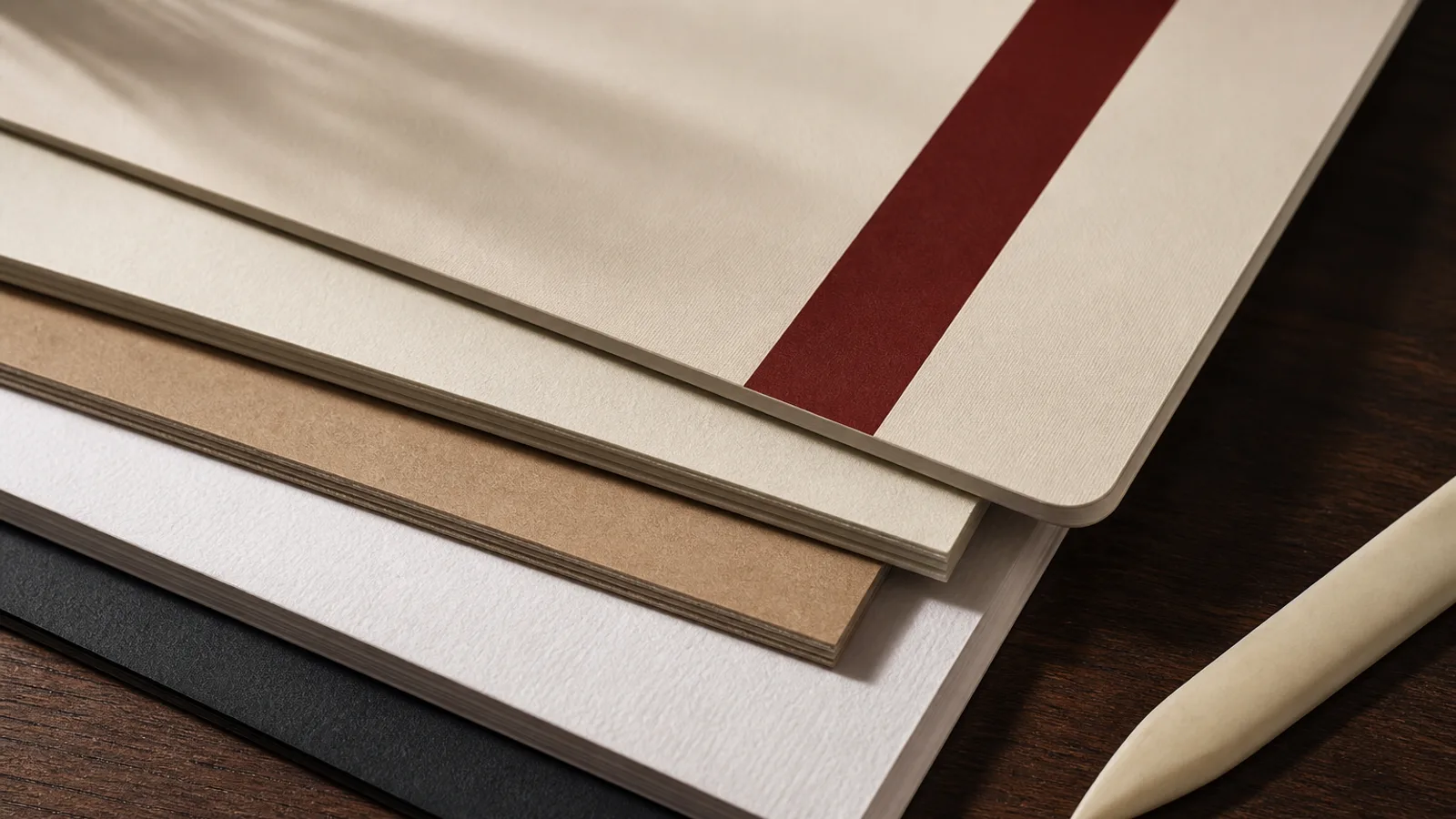
A guest with wet fingers should not ruin the carte, and the carte should not feel like a shower curtain. Those two sentences are in tension. Most rooms solve the first and ignore the second: they laminate in gloss, the sheet catches every candle, every fingerprint becomes a map, and the room drops half a register the moment the menu is opened. Waterproofing is a finishing decision, not a paper you buy once and forget. There are four honest ways to do it, and only two of them still feel like a dining-room object.
What waterproof actually means on a menu
No paper is waterproof. Paper is cellulose; cellulose drinks. What you can buy is resistance: a film, a coat or a synthetic sheet that stops a splash from becoming a stain and lets a cloth take the splash off. That is wipeable. Fully waterproof, as in a menu that can sit in a puddle for an hour, is a synthetic (polypropylene, polyester) or a thick gloss laminate sealed on all edges. Both of those look and sound like plastic when you set them down.
Decide which accident you are designing for. Condensation from a water glass and a wiped thumbprint are Tuesday night. A terrace in November rain and a kids' room with ketchup are different jobs. Designing the Tuesday-night menu as if it were a beach bar is how you end up with the shower curtain.
Four finishes, four feelings
Matt aqueous coating is a thin water-based layer applied in line on a digital or offset press. It takes the chalkiness off an uncoated sheet, slows down a splash, and still feels like paper. It is not a licence to scrub. A damp microfibre cloth, not a bleach wipe, not a soaking sponge. On 300 or 350 g silk or uncoated, this is the finish I specify first for rooms that want to wipe without announcing it.
Soft-touch laminate is a thin film with a velvet hand. It is genuinely wipeable, hides fingerprints better than gloss, and takes the glare off candlelight. The sheet no longer sounds like paper; it sounds slightly muted. That mute is acceptable in a dining room and wrong in a trattoria that has spent money on a cotton napkin. Soft-touch also scuffs if you stack menus face to face without a slip sheet, and it can peel at a badly cut corner after a few months.
Gloss laminate is the plastic look. High holdout, easy to wipe, terrible under a spot or a candle, every thumbprint visible, and a stiffness that makes a bifold feel like a folder from a conference. Use it on a takeaway flyer or an outdoor board you expect to hose. Do not use it on the dinner carte unless the brand is already plastic on purpose.
Synthetic sheets (Teslin, polypropylene, some polyester cards) can go through a dishwasher in the extreme versions. They never feel like paper. They are the right call for a beach club, a food truck, a pool menu. In a 40-cover bistro they read as a concession, not a choice.
- Matt aqueous on 300–350 g: wipe a splash, keep the paper hand, shortest life of the four.
- Soft-touch film on 350 g: the dining-room default, wipeable, low glare, slight mute on the sound of the sheet.
- Gloss film: maximum wipe, maximum plastic; keep it off the dinner table.
- Synthetic: actually waterproof, never paper; terrace, kids, truck, pool.
Edges, folds and the places water gets in
Laminate is only as good as its edge. A film that stops 1 mm short of the trim, or a cut that leaves the paper core open, wicks water into the board. You see it as a brown line creeping in from the corner. Ask for laminate to the edge, or a slightly oversized film trimmed flush, and for a clean cut on a sharp knife. Rounded corners last longer than square ones because they do not catch and lift.
A bifold must be scored before it is folded, film or no film. Soft-touch on an unscored 350 g will stretch on the outside of the fold and crack on the inside. The crack is a white line that then becomes a dirt line. Score, fold, then live with the menu; do not fold first and hope.
Single-sided laminate on a thick board, film on the face only, is a false economy. The back drinks, the face does not, and the sheet curls. Film both sides or coat both sides.
Design that still looks like paper
Finish cannot rescue a file that already looks cheap. A full-bleed photograph of a cocktail, 8 pt type, a rainbow of section colours: gloss film will make that louder. Soft-touch will make it quieter but not smarter. If you want a wipeable menu that still feels considered, design as if the sheet were uncoated: generous margins, one or two type families, prices that do not shout, a paper-coloured ground rather than a flood of process yellow.
Dark grounds are less forgiving of scuffs on soft-touch; the velvet shows a shiny track where menus have rubbed in a stack. A warm off-white or a quiet grey hides that better. If the brand is black, accept that you will reprint a little sooner, or interleave the stack with a plain sheet in the drawer.
Type size does not change with the finish, but contrast does. Soft-touch slightly dulls a thin hairline. Keep body copy at 9.5 to 11 pt and avoid a grey that sits at 40 percent on a cream ground; it will look like a suggestion rather than a dish.
Hygiene without the clipboard
A wipeable menu is not sterile. Train the floor to wipe with a barely damp cloth at the end of the turn, dry immediately, and pull any card that has a lifted corner or a sticky patch. Do not spray disinfectant onto the menu; spray the cloth. Alcohol lifts some aqueous coats and clouds some films. If a health inspector wants a protocol, write that, not a theatre of gloves and plastic sleeves that make the guest feel like a patient.
Sleeves and menu covers are another kind of waterproofing. A 350 g insert in a wipeable cover lets you reprint the paper cheaply and keep the object that is handled. That is often smarter than laminating a carte you will rewrite in six weeks. The cover takes the wear; the insert takes the dishes.
Choose the accident, then the finish
Write down the worst weekly accident: condensation, terrace rain, children, oil from the kitchen door. Match the finish to that, not to a sample that felt nice in a windowless print shop. Most European dining rooms are condensation and a cloth. Soft-touch on 350 g, or a matt aqueous if you refuse film, solves that without turning the table into a conference.
Menu Atelier prints on 350 g matt board with a soft-touch finish and a scored fold on bifolds: wipeable enough for a wet glass and a night of service, without the gloss-plastic look. The same file downloads as a 300 dpi PDF with 3 mm bleed if you would rather run a different coat at your own printer. Either way, decide the finish before you fall in love with an uncoated texture you cannot wipe.