Non-alcoholic drinks menu: giving mocktails and zero-proof equal billing
Why the non-alcoholic drinks menu deserves the same layout, naming and pricing care as the cocktail list, with concrete rules on placement, wording, glassware and margins.
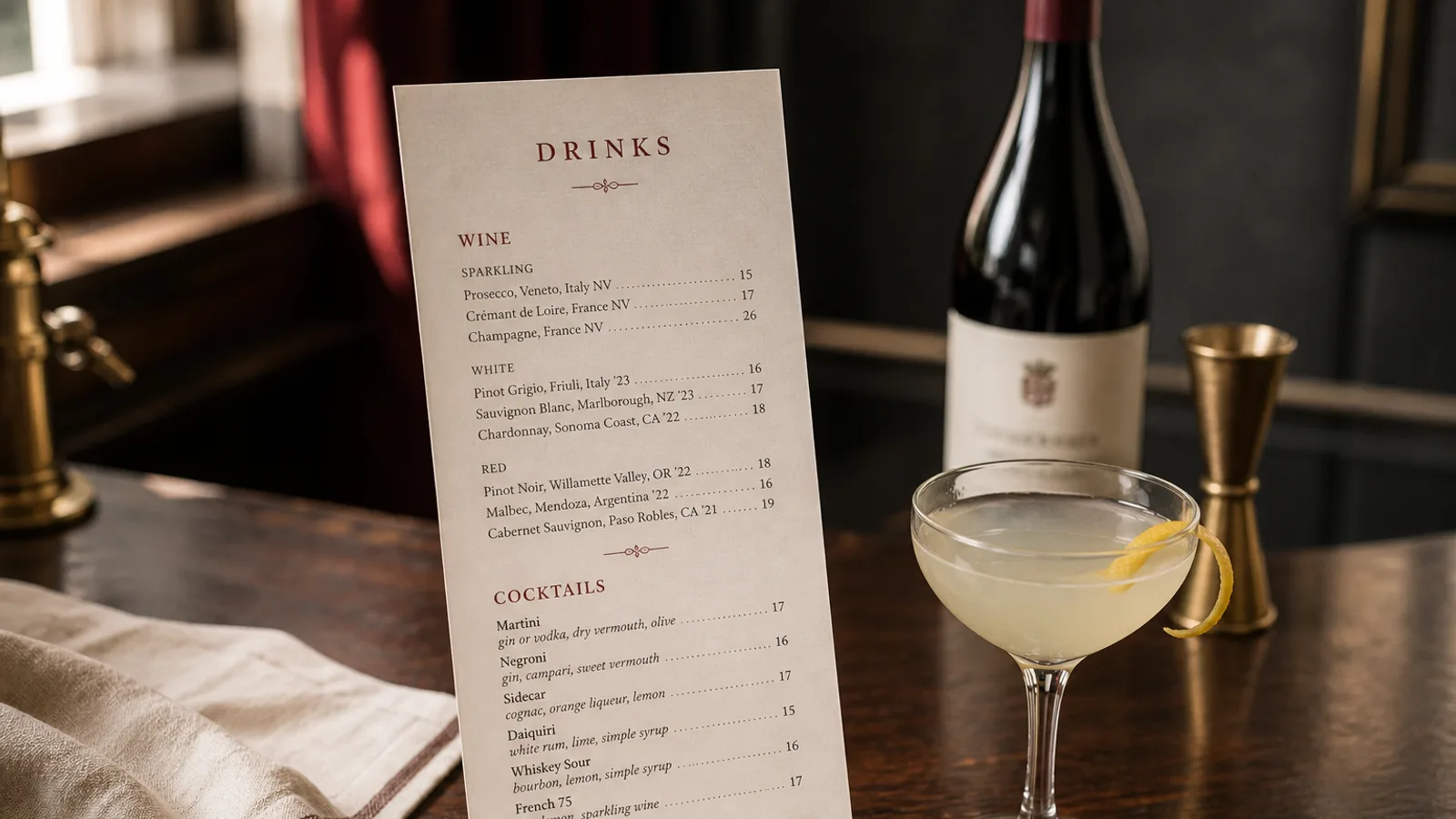
One guest in four at a European table now drinks little or no alcohol on a given night, and the menu they are handed usually tells them where they rank: a line that says Soft drinks 3.50 € at the bottom of the back page. The gap between what those guests would happily pay and what the menu invites them to spend is one of the cheapest fixes in the whole restaurant. This article lays out how to place, name, describe and price a non-alcoholic section so that it reads as a real choice rather than a consolation, and how to do it without rebuilding the drinks menu.
Placement: next to the cocktails, not under the water
The single most effective change is position. A zero-proof section that sits immediately after the cocktails, in the same typographic treatment, signals that the bartender took the same care. A section buried after coffee and juice signals the opposite. If your drinks menu is a bifold, put cocktails and non-alcoholic cocktails on the same inside spread, either as two columns or stacked with equal heading weight.
Give the section a name that does not apologise. Mocktails has become common but still reads as a diminutive; Zero-proof, Alcohol-free, Spirit-free or simply No alcohol are cleaner. In a bistro, Sans alcool or a heading that borrows the tone of the rest of the menu works better than a clinical label. Avoid the word Virgin next to a drink name; it dates the list.
Naming and describing the drinks
A non-alcoholic drink earns its price by having a name, an ingredient list and a description written with the same rhythm as the cocktails. Compare the line Virgin Mojito, 6 € with Lime, mint, cane sugar, soda, crushed ice, 7 €. The second is more expensive and sells better, because the guest understands what is in the glass and can picture it.
Use the same descriptive structure as the cocktail section: base flavour first, then modifiers, then the finishing note or garnish. Mention texture and temperature where they matter (shaken with egg white, served long over ice, hot). Name the producer when you use a distilled non-alcoholic spirit or a de-alcoholised wine; guests who buy those at home recognise the brands and read them as a mark of quality.
- Three to six house creations with proper names, not a list of every juice you stock
- One de-alcoholised sparkling wine and, if you sell it, one still, listed by producer and grape
- One or two craft sodas or shrubs that are not available in a supermarket
- Bottled water and standard soft drinks in a compact block at the end, priced but not described
Pricing without embarrassment
Restaurateurs routinely under-price zero-proof drinks out of a sense that there is no alcohol to justify the cost. The guest is not paying for ethanol; they are paying for the bartender's time, the glassware, the fresh citrus and the fact that they are sitting in your dining room. A well-made non-alcoholic cocktail with fresh ingredients costs 1 € to 2 € in goods and takes as long to build as a gin and tonic. Pricing it at 7 € to 10 € in a city restaurant, roughly 70 to 80 percent of the cocktail price, is fair and expected.
Keep the price column consistent with the cocktails. If cocktails are listed at 12, 13, 14 without a currency symbol on every line, do the same for the zero-proof drinks. A sudden switch to 6.50 € with two decimals and a symbol marks the section as a different, cheaper category.
The de-alcoholised wine problem
Alcohol-free wines are legally allowed to use the word wine in the EU only under specific conditions (de-alcoholised or partially de-alcoholised wine, since the 2021 CAP reform), and their quality varies wildly. If you list one, list it under the sparkling or white section of the wine list with the same formatting as the other bottles, plus a discreet 0.0% or <0.5% note. Do not create a separate Alcohol-free wine heading that isolates it; a guest who wants it will find it where they expect wine to be.
Glassware, garnish and what the menu implies
The menu makes promises the glass has to keep. If you describe a drink with the vocabulary of a cocktail, serve it in a cocktail glass, not the tumbler you use for cola. Guests who abstain report that being served an obviously different, cheaper glass is the moment they feel singled out. The design of the menu and the design of the service should tell the same story.
One practical detail: state the volume for long drinks (25 cl, 33 cl) if you state it for beers and soft drinks. Consistency in units across the whole drinks menu is a small typographic courtesy that guests notice without being able to name it.
Labelling and legal notes
Non-alcoholic drinks still need allergen information under Regulation 1169/2011: egg white in a shaken drink, nuts in an orgeat syrup, sulphites in de-alcoholised wine, milk in a cream soda. Use the same allergen shorthand you use for food, in the same small size at the end of the line, and keep the full key on one visible spot on the menu. If a drink uses a non-alcoholic spirit that contains traces of alcohol (many do, up to 0.5% ABV), a one-line note at the foot of the section protects guests who avoid alcohol for medical or religious reasons.
Do not describe a drink as sugar-free or low-calorie unless you can substantiate it; nutrition claims are regulated across the EU and a menu is a commercial communication.
A section that pays for itself in a week
Moving the zero-proof drinks next to the cocktails, giving them real names and pricing them at 7 € to 10 € instead of 4 € typically adds 2 € to 4 € to the average spend of a guest who was never going to order wine. On a room of 60 covers with a quarter abstaining, that is 30 € to 60 € a night for a change that costs one reprint of the drinks menu. Test it for a month, watch the mix, and drop the two drinks that nobody orders.
In Menu Atelier, a drinks menu is built from the same dish list as the food menu, so a zero-proof section takes its style from the cocktail section automatically; describe the mood in one sentence, place the two sections side by side on a bifold, check the result in 3D and download the print files or order the printed menus.