Sake and Japanese drinks menus: grades, temperatures and pairing
How to set a sake and Japanese drinks list guests can actually order from: grades, serving temperatures, glassware, pairing notes and a layout that stays calm.
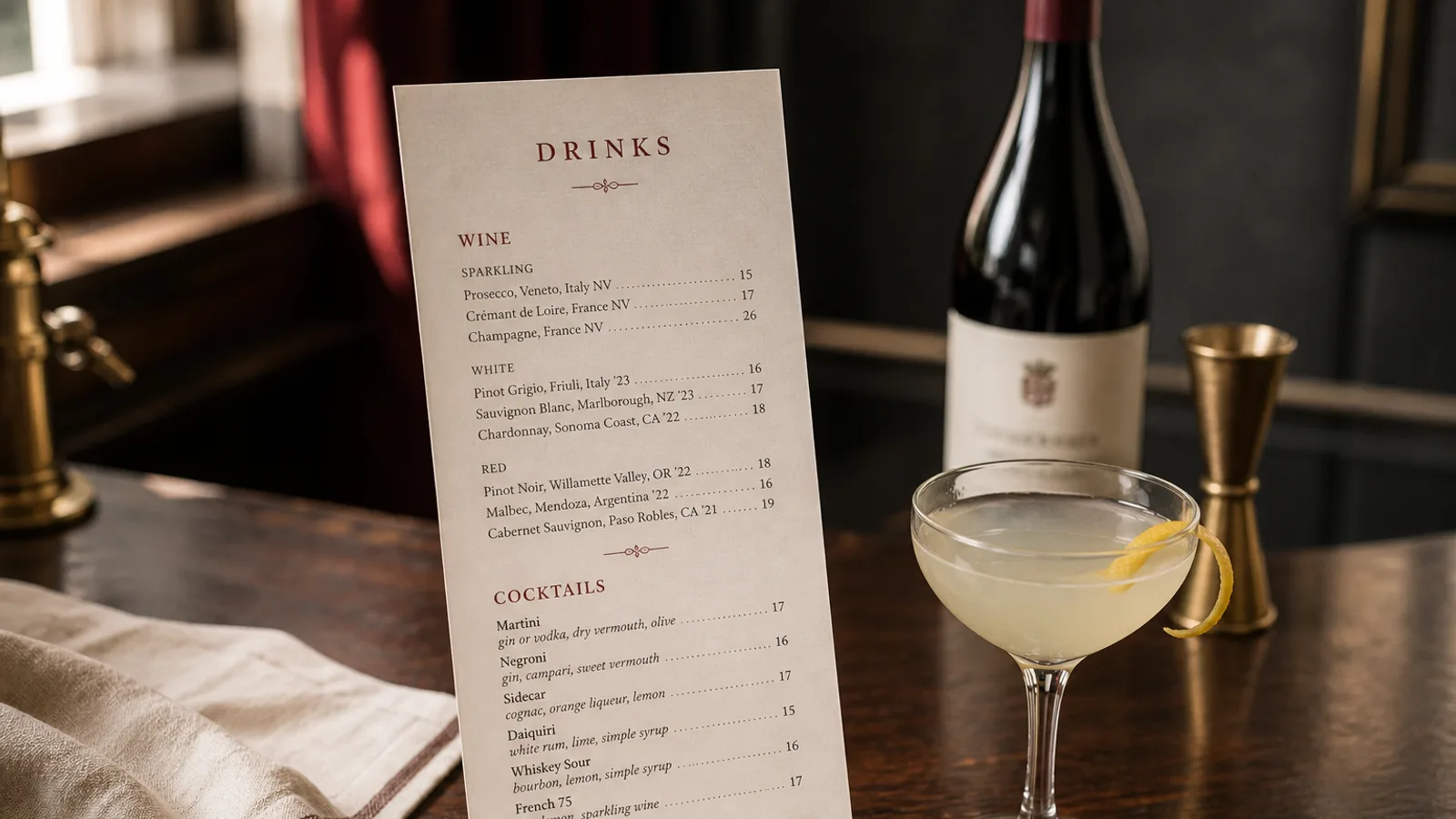
A sake list that reads like a collector’s spreadsheet will sell the two bottles the waiter already knows. A list that reads like a cocktail card — pretty names, no facts — will sell the same two bottles, plus a beer. The useful card sits between those failures. It tells a guest who has never ordered sake what the liquid is, how cold it will arrive, and what on the food menu it can sit next to, without turning the table into a seminar.
Grades that earn their line
Keep the official grades, and keep them short. Junmai, ginjo, daiginjo, honjozo: those four, plus a line for unpasteurised (nama) if you pour it, cover what a European room needs. Polishing ratios (50 percent, 60 percent) matter to the buyer and to almost nobody at the table. Put the ratio in 8 pt after the grade if you must; do not make it the first word. The first words are the brewery or the house name, then the grade, then the prefecture if it helps a regular find a favourite.
Nigori, sparkling, aged (koshu) and kimoto or yamahai styles need a plain clause, not a poem. “Cloudy, lightly sweet” and “richer, more acid” do more work than a paragraph on yeast. Shochu, umeshu and Japanese whisky belong in their own short blocks, not mixed into the sake column as if they were cousins. A guest hunting for a 12 cl pour of umeshu should not have to scan twelve junmai names first.
Temperature is a service fact, not a flourish
Print the temperature you will actually serve, not a range the bottle could theoretically survive. A small mark after the name — chilled, room, warm — is enough if the legend is at the top of the page. If a bottle works two ways, say the default and let the waiter offer the other. Do not print a thermometer graphic with five Japanese terms (reishu, joon, nurukan…) unless the room is a sake bar and the staff can defend every mark. In a mixed restaurant, three states are plenty.
Glassware follows temperature. A small wine glass for chilled ginjo, a ceramic ochoko or a small tumbler for warm junmai: write it only if the guest can choose. Otherwise train the floor and leave the card for the liquid. Listing “served in a daiginjo glass” next to a 9 € glass is theatre.
Pairing without a second novel
One pairing hint per bottle, six to ten words, is the useful maximum. “With grilled fish and pickled ginger” or “with karaage and salt” beats “a versatile companion to the entire menu”. Point at a section or a specific dish you actually cook. If the food card is short, a single line under the sake heading — “ask for a pour with the sashimi or the fried dishes” — is cleaner than eight micro-pairings that all say “seafood”.
By the glass first. A list of twelve bottles and two glass pours will sell beer. Aim for six to ten glasses, 8 to 14 cl stated, prices in a column, then a shorter bottle list for the table that wants to stay. Mark the house pour, the one the kitchen likes with the set menu, in the same type as the others — a small word “house”, not a box or a gold star.
- Name, grade, prefecture or rice if it is the selling point, then temperature, then price.
- Alcohol by volume in 8 pt; sake sits around 15–16 percent and guests who drink wine will ask.
- A short note on the 14 allergens only where they apply (ume, dairy in some nigori desserts, etc.).
- No English puns on “sake” and no rising-sun ornaments next to every line.
Layout that stays as quiet as the pour
Sake type is often thin and pale. Give it more leading than a wine list of the same length, and keep the page closer to Sushi Zen or Modern Minimal than to a busy bistro card. One column on A5, or two on A4 if the names stay above 9 pt. Dotted leaders to the price are acceptable if the dots are the same colour as the text, not a faint grey. A map of Japan as a background is almost always a mistake: the type will lose.
A list a stranger can pour from
Give the guest a name they can say, a grade they can place, a temperature they will receive, and one honest pairing. Keep shochu and sweet fruit drinks in their own blocks. Leave the polishing ratios and the yeast strains for the conversation, or for a QR that the enthusiast can open. The printed page should get a first-time table to a glass in under a minute, which is longer than they will spend if the page looks like homework.
In Menu Atelier the Sushi Zen style is a calm starting point for a sake card; you can keep drinks on a second face of an A5 bifold, switch to a single A4 sheet if the list grows, and check the fold in 3D before you print on 350 g matte.